
Designing the Arsenal
Anduril Industries built brand and design into the company from the early days.
That bet has compounded into a $61 billion valuation, $5 billion recently raised from Thrive Capital and Andreessen Horowitz, and a brand that has redefined what a defense company can look like.
The most important hire wasn't an engineer.
It took them four years to hire a head of design. Trae Stephens, the co-founder and chairman, interviewed more than 50 people. They didn't hire anyone until Jen Darhy Bucci came along in 2021.
Bucci's design org is around 50 people. Industrial, brand, motion, interaction, environmental, concept, sound, animation. One team, reporting through her, embedded in every product line.
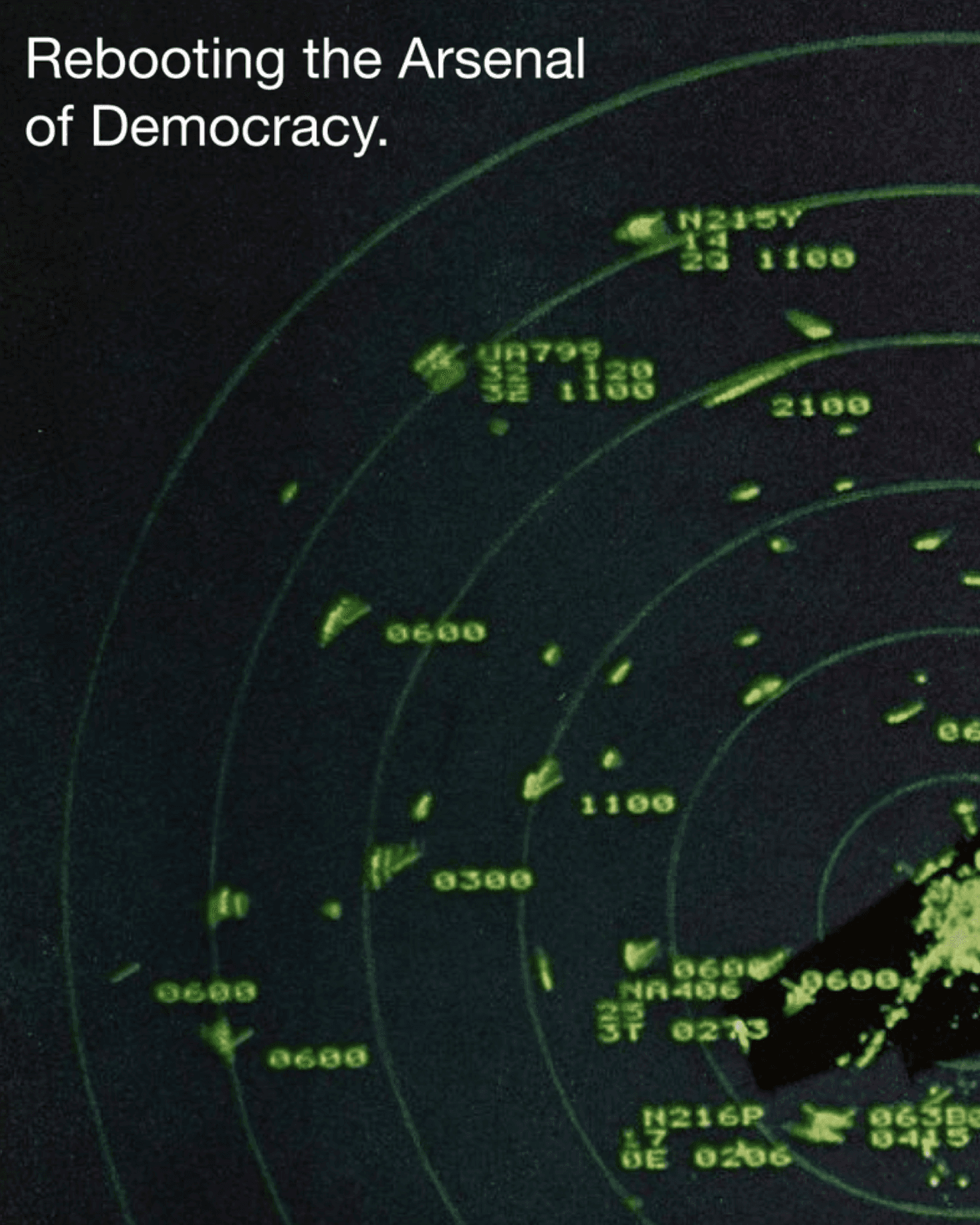
The work breaks across Anduril's product lines: Fury (autonomous fighter jet), Barracuda (cruise missile family), Maneuver Dominance (the broader autonomous battlefield program). Concept designers illustrating missions. Product illustrators dedicated to specific platforms. CMF specialists handling color, material, and finish across every product. Instructional designers building manufacturing documentation.
Anduril runs this kind of design org because they're not a traditional contractor. Lockheed, Boeing, Northrop, Raytheon, General Dynamics, they all court big government contracts and build whatever the Pentagon asks for. Anduril spends hundreds of millions of its own money making bets on what the military will want five years into the future. That business model can't work without design as a real investment.
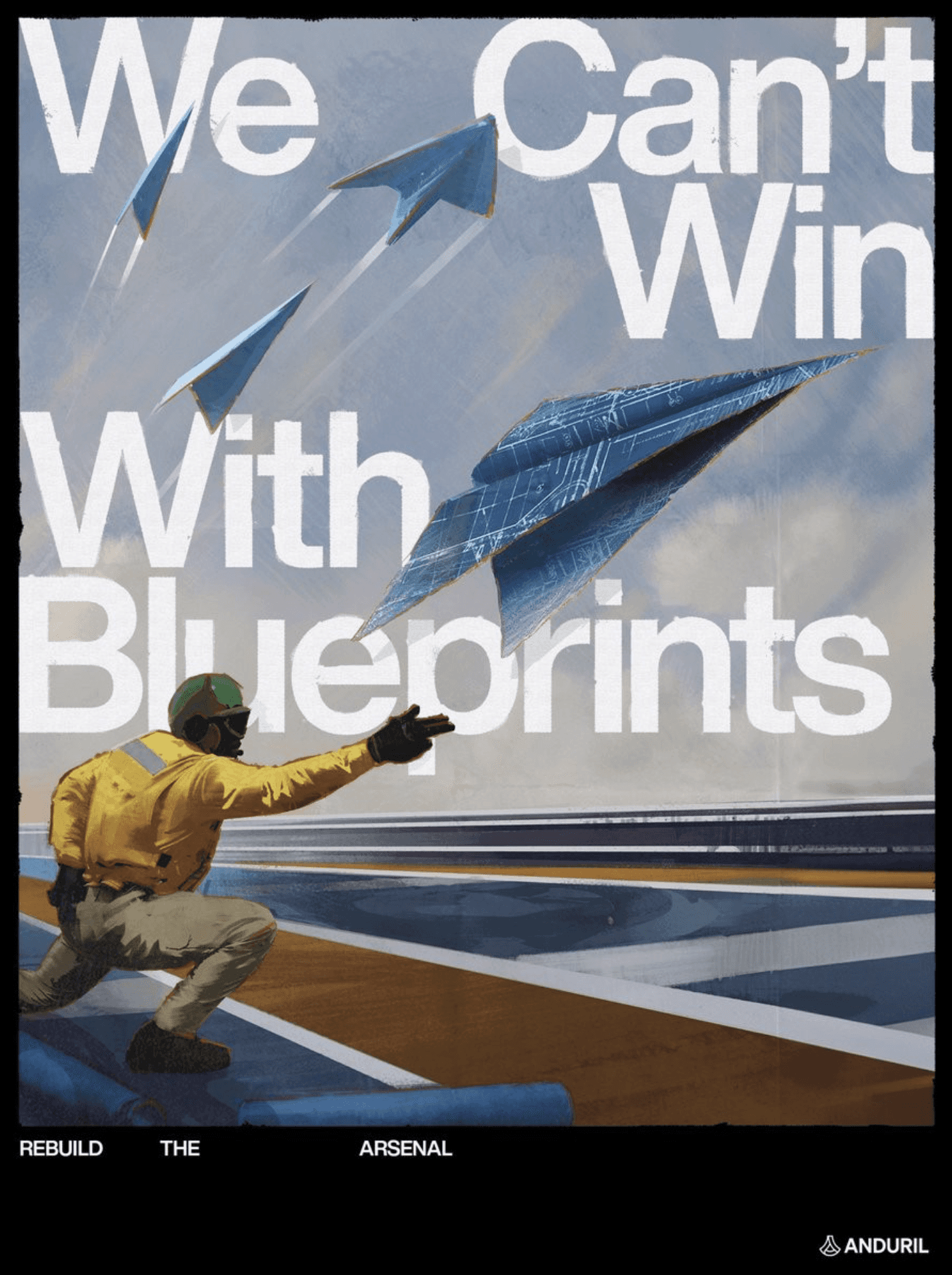
Design shows up everywhere, including in the software and on the website. Lattice (Anduril's autonomy and command-and-control platform) has its own dedicated product design team building the interface warfighters actually use. The website, led byreads more like a consumer tech company than a defense contractor. None of this existed in defense tech a decade ago. Anduril made it standard.
Design shows up everywhere, including in the software, the website, the campaigns, and the films. Lattice (Anduril's autonomy and command-and-control platform) has its own dedicated product design team building the interface warfighters actually use.
The website, led by Yashas Mitta and the team at Raw Materials, reads more like a consumer tech company than a defense contractor. The Barracuda missile was launched with a Japanese anime commercial. The Fury's maiden flight became a film shot like a Patagonia documentary, produced entirely in-house. None of this existed in defense tech a decade ago.
The compounding effect: a recruiting flywheel (Bucci went from "nobody was applying" to countless applications), a fundraising story journalists actually want to write, and a first impression that's the opposite of what every other defense company has been doing for sixty years.
Every defense startup founded in the last five years is now trying to look like Anduril.
Build a strong brand + creative stack into the business from the start, it becomes one of the most powerful growth levers the company has.
Curated by Carson Ortolani